
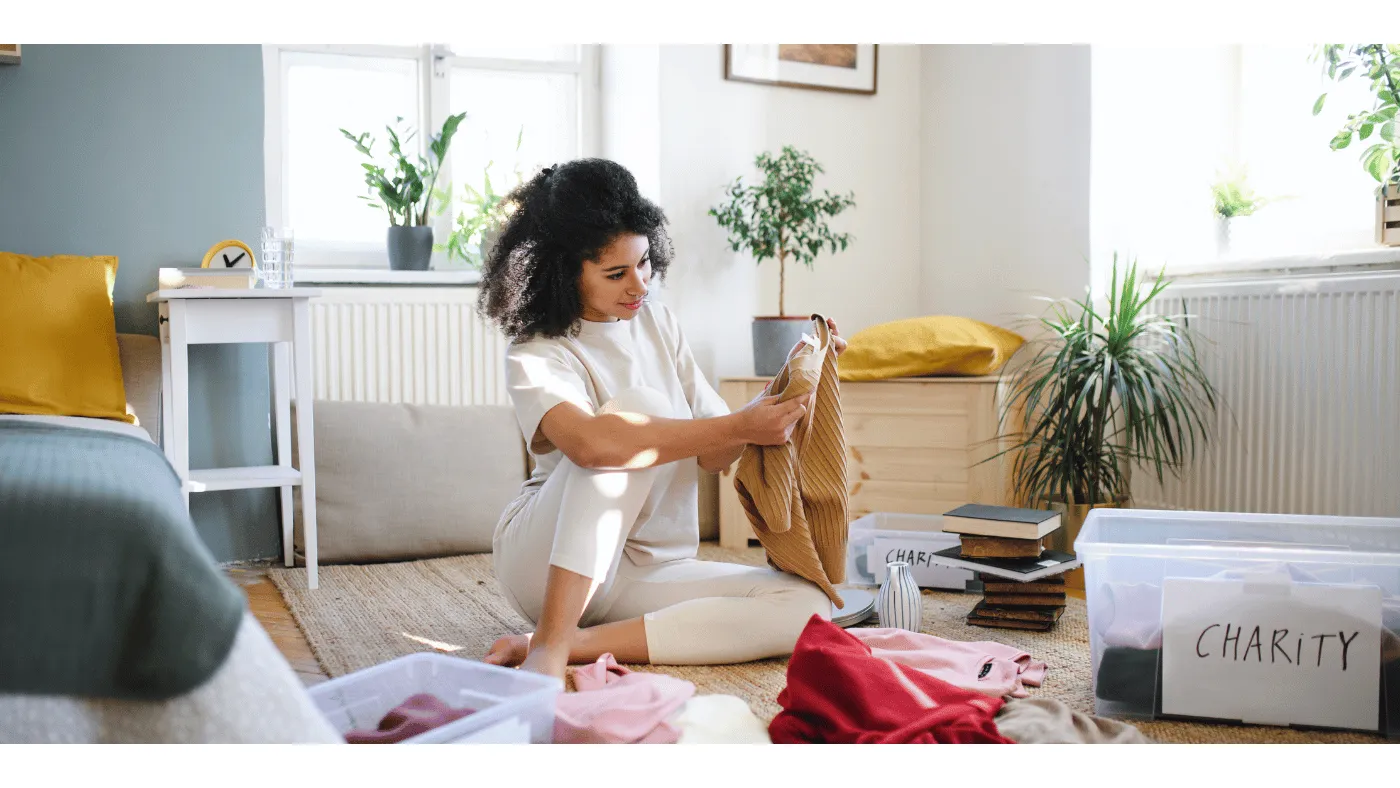
Learning how to declutter your home can feel intimidating when every room seems to need attention. The easiest way to begin is to stop thinking of it as one enormous project. Instead, work in small areas, make one decision at a time, and build a system you can maintain after the initial cleanup is finished.
This guide walks through a practical process for decluttering your home without emptying every closet onto the floor or giving up halfway through. You will learn how to set priorities, sort belongings, organize what remains, and decide when an extra storage space may be useful.
Why Decluttering Your Home Is Worth the Effort
Clutter is not only a visual issue. It can make everyday tasks slower because you spend more time searching for items, moving things out of the way, or cleaning around belongings you rarely use.
A more organized home can help you:
Find everyday items more quickly
Create clearer countertops, floors, and workspaces
Make cleaning and household routines easier
Use closets and cabinets more effectively
Prepare for a move, renovation, or change in household needs
Feel more comfortable inviting people into your space
The goal is not to create a home that looks untouched. A useful organizing system should support the way you actually live.
How to Declutter Your Home Without Getting Overwhelmed
Before you begin, choose a small and specific starting point. “Declutter the kitchen” is broad. “Sort the top pantry shelf” is manageable.
Set aside a short block of time and gather a few basic supplies:
Trash and recycling bags
A box for donations
A container for items that belong elsewhere
Cleaning supplies
Labels and a marker
A timer
A phone or notepad for measurements and reminders
Avoid buying a large collection of organizers before sorting. You will not know what type of storage you need until you decide what is staying.
1. Set a Clear Goal
Decide what you want to improve before you start moving things. Your goal might be to clear a guest room, make a hallway easier to use, prepare for a move, or create more room in a shared closet.
Write down one sentence that describes the result you want. For example:
I want the dining table to stay clear between meals.
I want every coat and pair of shoes to fit in the entryway.
I want the guest room ready for visitors.
I want to reduce the number of boxes in the garage.
A specific goal helps you recognize when the project is complete. It also prevents you from getting distracted by unrelated areas. If you are still unsure how to declutter your home, begin with the area that causes the most daily frustration.
2. Start with One Small Zone
Choose a drawer, shelf, countertop, or small section of a room. Completing one visible area provides momentum and gives you a quick example of what the rest of the space could look like.
Good starting areas include:
A bathroom drawer
One kitchen cabinet
The top of a dresser
A nightstand
A single closet shelf
The entryway floor
One box in the garage
When learning how to declutter your home, small wins matter more than dramatic first-day progress. Finishing one area is more useful than creating several unfinished piles.
3. Use a Simple Sorting Method

Use five categories instead of debating every item in place:
Category | What belongs there |
|---|---|
Keep | Items you use, need, or genuinely value |
Donate | Usable items that someone else could benefit from |
Sell | Items worth the time and effort required to sell |
Recycle or discard | Broken, expired, or unusable items |
Relocate | Items that belong in another room |
Handle each item once and place it into a category. Avoid creating a large “maybe” pile. If you are unsure, limit that category to one small container and set a date to review it.
A decluttering checklist can also keep decisions consistent. Ask yourself:
Have I used this during the past year?
Would I buy it again today?
Do I own another item that serves the same purpose?
Does it fit my current needs?
Do I have a realistic place to keep it?
Am I keeping it only because it was expensive or was a gift?
You do not need to remove every sentimental item. Instead, decide how much space you are comfortable dedicating to that category.
4. Clear Surfaces Before Hidden Storage
Visible surfaces create the strongest sense of clutter, so begin with countertops, tables, desks, and floors before reorganizing every cabinet.
Remove items that do not belong, then group the remaining belongings by purpose. A kitchen counter might need space for a coffee maker and fruit bowl, but not stacks of mail, unused appliances, and shopping bags.
Once the surface is clear, clean it before returning anything. Leave some open space rather than filling every available inch.
This approach creates an immediate visual improvement and makes it easier to continue decluttering your home.
5. Eliminate Duplicates
Duplicates often build up gradually. You may have several can openers, nearly identical baking dishes, extra charging cables, or more towels than your household regularly uses.
Gather similar items in one place so you can see the full quantity. Keep the versions that work best and remove broken, uncomfortable, or rarely used extras.
Pay particular attention to:
Kitchen utensils
Reusable water bottles
Food storage containers
Towels and linens
Cleaning products
Office supplies
Cords and chargers
Toiletries
Tools
Seasonal decorations
Do not remove duplicates that serve a clear purpose. The goal is to reduce unnecessary repetition, not create inconvenience.
6. Give Every Remaining Item a Home
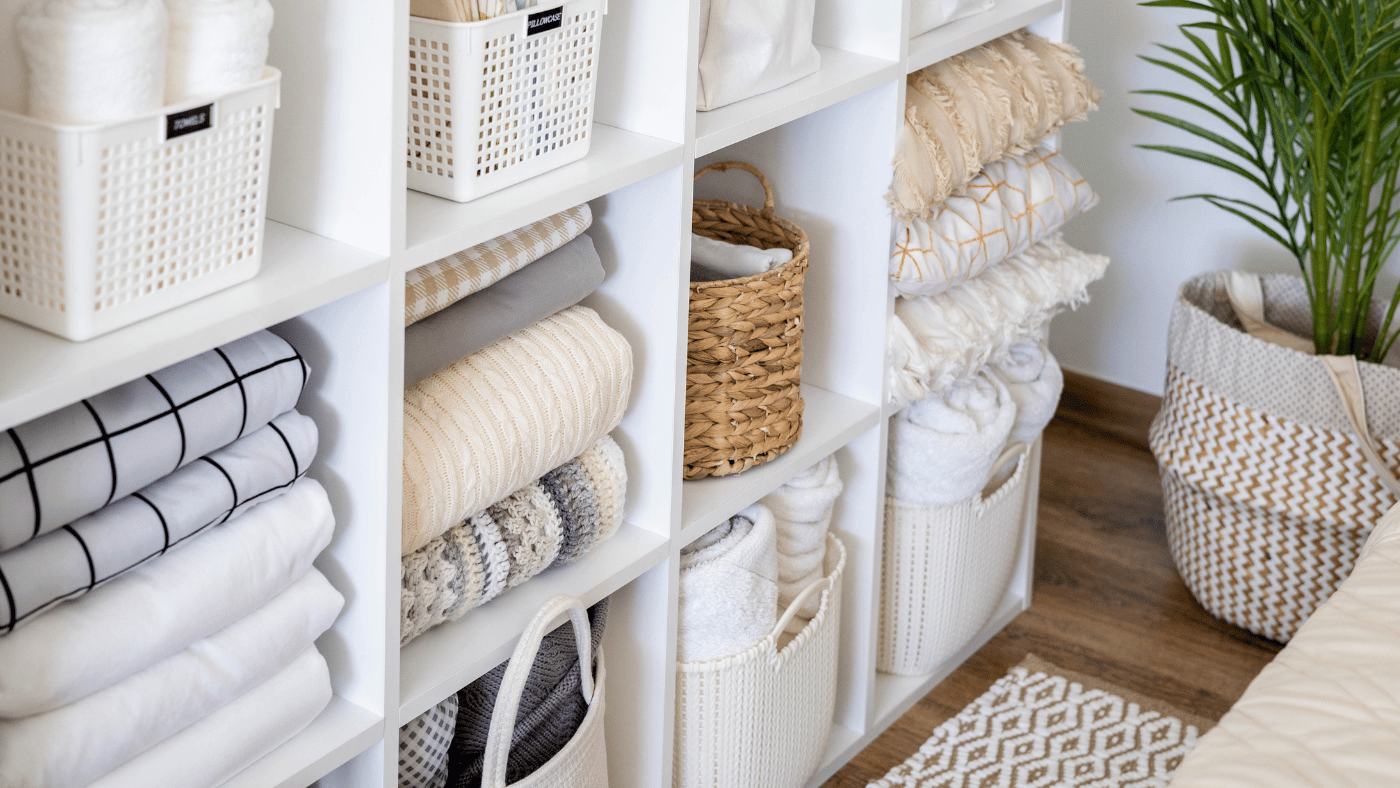
Organization becomes easier when each item has a designated location. Store belongings near where you use them and group related items together.
These home organization tips can help:
Keep frequently used items between waist and eye level.
Place seasonal or occasional items on higher shelves.
Use drawer dividers for small categories.
Label containers that are not transparent.
Keep heavy belongings on lower shelves.
Avoid stacking items so deeply that the back row disappears.
Leave a little empty space for future needs.
Before buying containers, measure the shelf, drawer, or cabinet. Choose products that fit the space and the items rather than forcing belongings into an organizer simply because it looks attractive.
Avoid filling every container to its limit. A small amount of open space makes it easier to return items and maintain the system.
7. Set a Timer and Stop on Purpose
A timer can make the process feel more approachable. Try a 15-, 30-, or 60-minute session based on your schedule and energy level.
During that time:
Work in one defined area.
Avoid leaving the room to put things away.
Place relocated items in one basket.
Stop when the timer ends.
Remove trash and donations before finishing.
Stopping intentionally can prevent burnout. It also makes decluttering easier to repeat because you know the project will not consume the entire day.
Schedule the next session before you stop. Even two short sessions each week can produce noticeable progress over time.
8. Decide What Belongs in Storage

Not everything you keep needs to occupy prime space in your home. Seasonal decorations, hobby equipment, archived records, extra furniture, and sentimental belongings may be used too infrequently to justify crowding everyday areas.
First, consider whether an attic, garage shelf, under-bed container, or high closet shelf can hold the item appropriately. If home storage is already full, self-storage for decluttering may provide extra room for belongings you genuinely want to keep but do not need regularly.
Before moving anything off-site:
Confirm that the item is permitted under the rental agreement.
Clean and dry it completely.
Use an appropriate container.
Label the contents clearly.
Create an inventory.
Keep frequently needed items near the front.
Avoid storing anything you may need during an emergency.
When deciding how to declutter your home with limited space, use off-site storage selectively. A storage unit should support an organized plan, not become a place to postpone decisions about unwanted belongings.
9. Remove Donations, Sales, and Trash Promptly
Sorted items can quickly become a new form of clutter if they remain in bags and boxes for weeks.
Set a deadline for each category:
Take donations to a local organization or arrange pickup.
List sale items by a specific date.
Recycle materials according to local guidelines.
Dispose of unusable items properly.
Return relocated belongings to their correct rooms.
Be realistic about selling. If an item has low value or requires more time than you can give, donating it may be the better choice.
Completing this step is essential when figuring out how to declutter your home because the space is not truly cleared until outgoing items have left.
10. Create a Routine That Prevents Clutter from Returning
A one-time cleanup helps, but small habits protect your progress.
Try adding these practices to your routine:
Reset counters and shared spaces each evening.
Keep a donation box in a closet or garage.
Review one drawer or shelf each week.
Deal with mail as soon as it enters the home.
Return items after using them.
Check what you already own before buying duplicates.
Review seasonal belongings as you pack them away.
You can also use a one-in, one-out guideline for categories that tend to grow quickly, such as clothing, toys, mugs, or decorative items.
Choose habits that fit your household. An organizing system that takes too much effort will eventually be abandoned.
More Storage Tips for Specific Needs
Once the main living areas are under control, look at belongings connected to hobbies, work, and seasonal activities.
Hobby and Recreation Storage
Group equipment by activity and keep accessories with the larger item they support. For example, store cycling helmets, locks, lights, and repair tools near the bicycles.
Clean and dry outdoor gear before storing it. Use sturdy shelving, hooks, or containers that support the item without blocking walkways.
Review hobby supplies periodically. Materials connected to hobbies you no longer pursue may be useful to a school, community group, or another hobbyist.
Household and Business Paperwork
Sort paperwork into current records, archived documents, and items that can be securely discarded. Keep essential records accessible and use clearly labeled folders or document boxes.
Business supplies, archived records, or extra inventory may require more space than a home office can provide. Choose a system that allows you to locate specific items without opening every container.
Avoid storing original documents somewhere you cannot access when they are needed. Consider maintaining secure digital copies of essential records.
Seasonal Belongings
Rotate clothing, decorations, and recreational equipment as the seasons change. Place current items within easy reach and move out-of-season belongings to less accessible areas.
A brief seasonal review is also a good opportunity to remove damaged or unused items before they return to storage.
Label containers by category and contents rather than using broad labels such as “winter” or “holiday.” Specific labels make it easier to retrieve one item without opening every box.
Try a 30-Day Decluttering Challenge
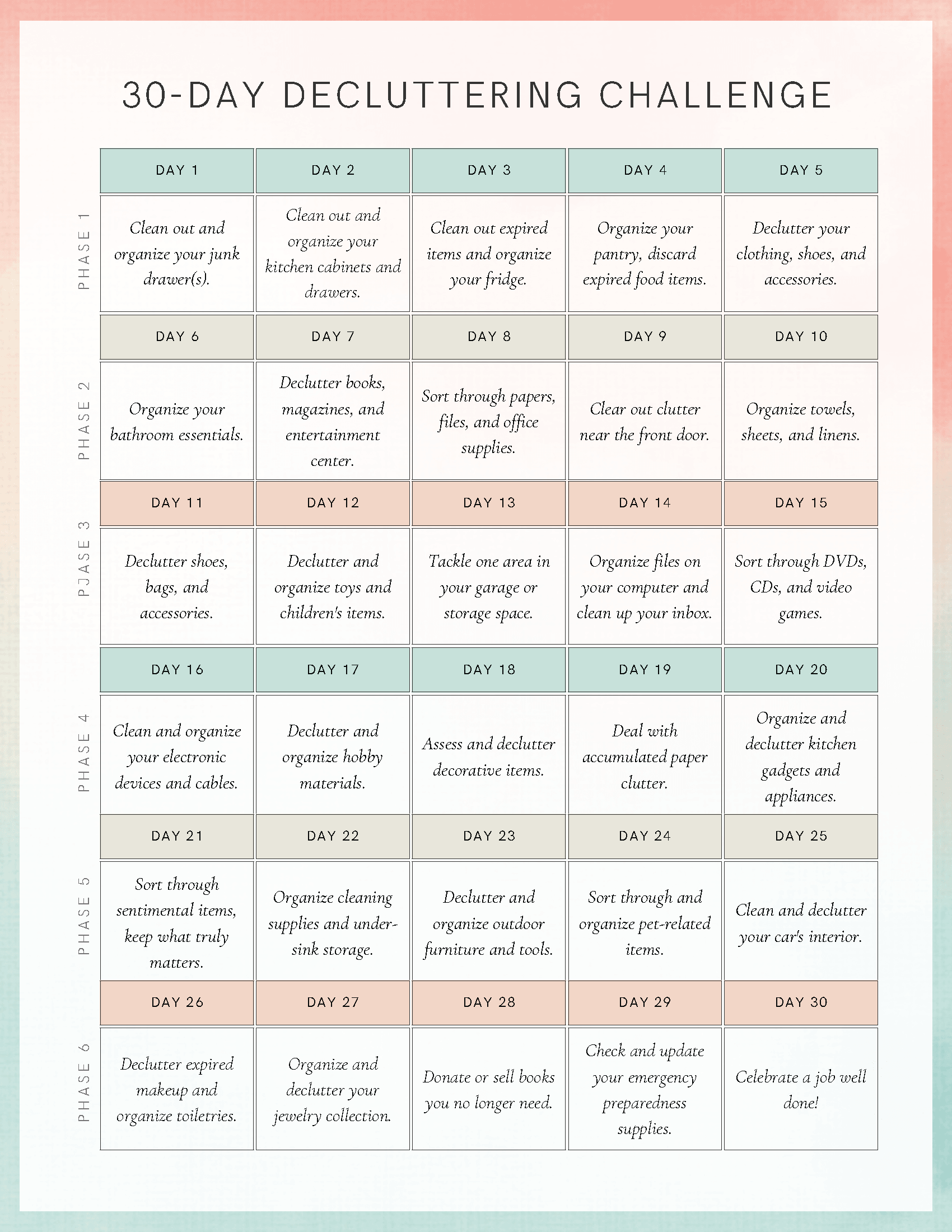
A 30-day decluttering challenge can make a large project feel more manageable. Instead of spending an entire weekend sorting the house, complete one focused task each day.
A balanced challenge might include:
Easy early tasks, such as one drawer or countertop
Category-based projects, such as shoes or food containers
One room at a time
Donation and recycling days
A final week focused on maintenance systems
Keep daily tasks small enough to finish. Missing one day does not mean you need to restart. Continue with the next task or adjust the schedule to fit your routine.
Use the challenge as a guide, not a test. The goal is steady progress and a home that becomes easier to manage.
Ready to Start Decluttering?
Make the process feel more manageable with our free 30-Day Decluttering Challenge. Complete one simple task each day to build momentum, clear clutter, and create a home that is easier to maintain.
Download the Free Challenge PDF
Common Decluttering Mistakes to Avoid
Watch for these common problems:
Emptying several rooms at once
Buying organizers before sorting
Keeping items only because they were expensive
Creating an unlimited “maybe” category
Moving clutter from one room to another
Leaving donations in the house indefinitely
Filling every shelf immediately after clearing it
Keeping broken items without a repair deadline
Expecting the system to remain perfect without maintenance
If your first approach does not work, adjust it. Learning how to declutter your home often requires testing a system and changing what does not fit your routine. Effective organization should be flexible enough to support changing household needs.
FAQs
Make Your Home Easier to Maintain
The best way to learn how to declutter your home is to begin with one manageable area and repeat the process. Set a goal, sort carefully, create clear homes for what remains, and remove outgoing items promptly.
A clutter-free home does not need to be perfectly minimal. You need a space that supports your routines and is realistic to maintain.
Ready to create more usable room? Explore available storage options and choose a solution that fits your household needs.


